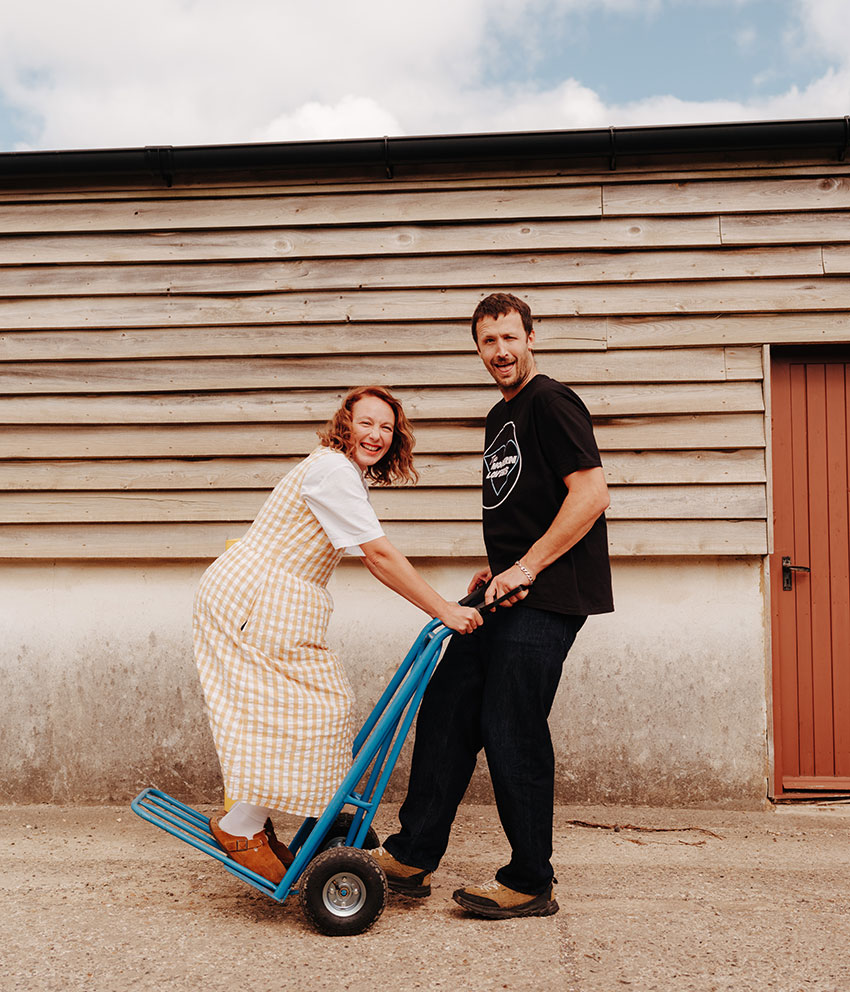


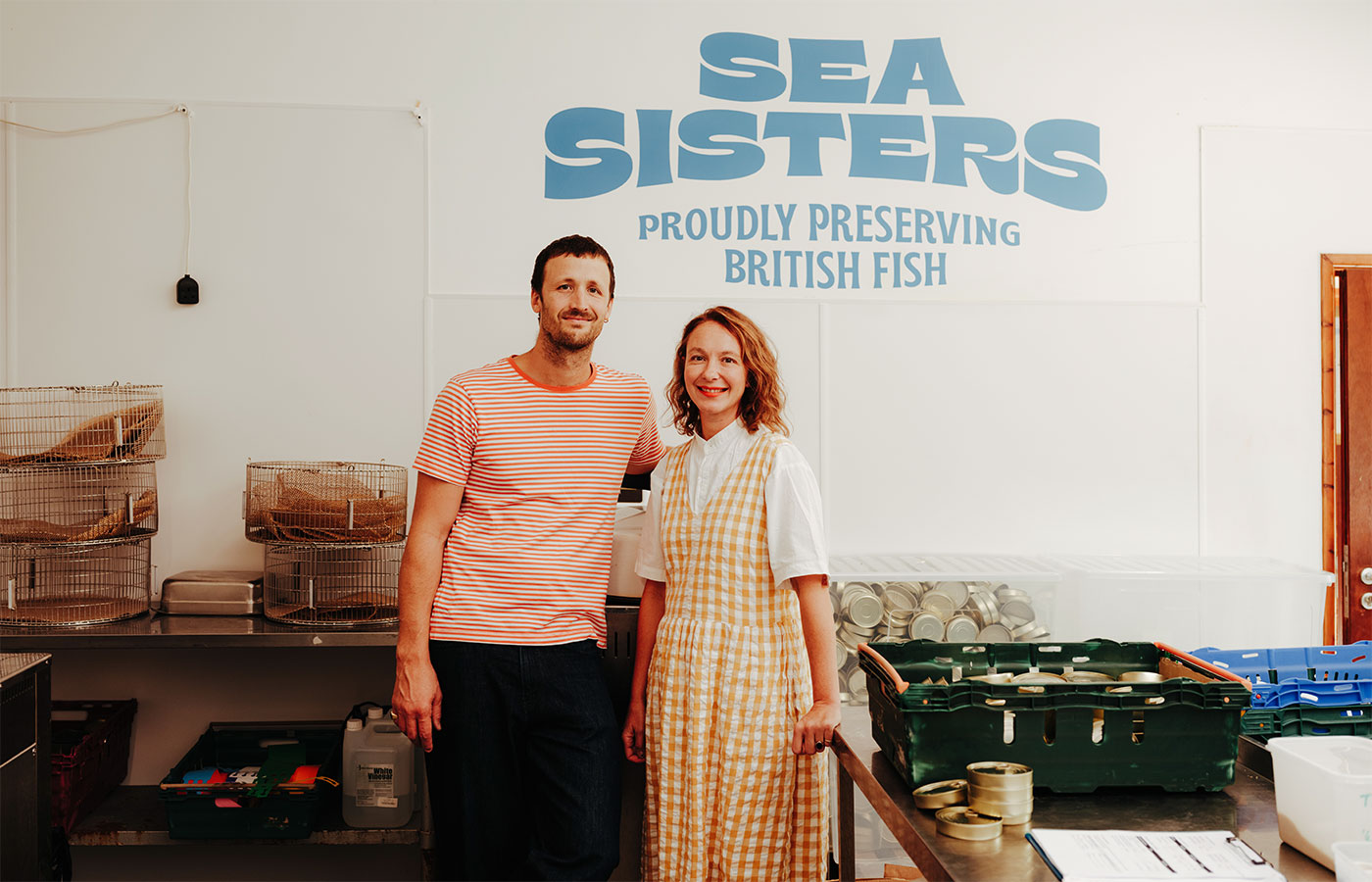
Sea Sisters started with a kind of romantic frustration. Charlotte Dawe and Angus, her partner, had been travelling through Europe and eating the kind of preserved fish that Spain and Portugal treat with real respect: opened with drinks, shared with bread, eaten as something desirable in its own right. When they came home, the gap was hard to ignore. Britain is surrounded by fish, but most of the canned fish they were buying came from outside the UK.
During lockdown, with two young daughters at home in Hackney, they started looking at what it would actually take to make British conservas properly. Angus had worked as a chef in London and brought that chef’s instinct to sourcing: bright eyes, good provenance, and great ingredients. Charlotte talks about that period as a process of realising how little they had known before. “You’re just sort of ignorant to all these things until you dive into something,” she says. What began as a food product became a way of asking what British fish looks like, where it lands, when it is seasonal, how it is caught, and how it can be eaten.
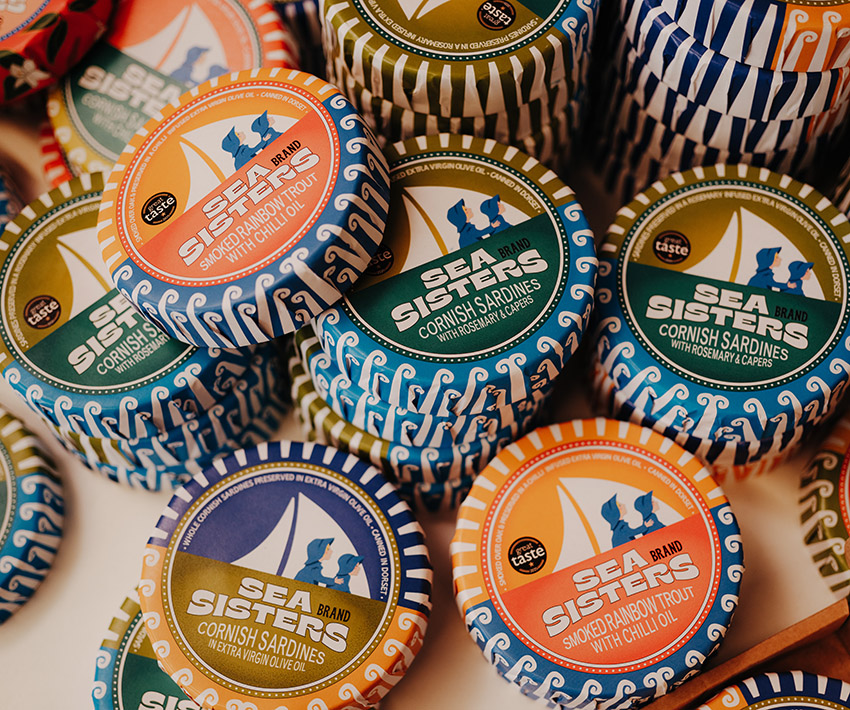
The brand came together in the same make-it-work spirit. Sea Sisters is named after their two daughters, and from the beginning Charlotte and Angus had a very clear idea of how it should look: something with the charm of old canning labels, mermaid brands and fisherman packaging, but brighter and more joyful. The first version began as sunbeams and waves sketched out like “a scribble in a pub”, before a few creative friends helped turn it into the packaging it is today.
The harder part was making the product. After a year of research and development, food scientists, thermal processing, British fish, quality ingredients and the overheads of a small micro-cannery, they sat down to work out what the cans needed to cost. One of the first products, a salt pollock, came out at £15. “We were like, no way, no one’s going to buy this,” Charlotte says. They were both embarrassed by the price, but the £15 pollock became the first can to sell out.
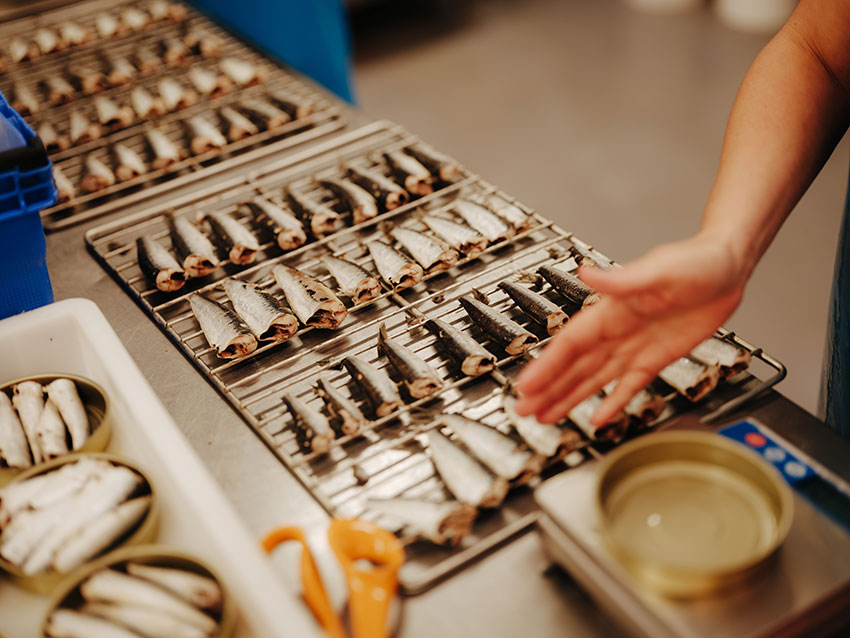
That £15 can became the simplest explanation for what Sea Sisters was trying to do. A can of fish is easy to underestimate because we think we know what it is supposed to be: cheap, useful, stuck at the back of the cupboard. Sea Sisters treats it more like cheese, charcuterie or wine – something with a maker, a season, a source and a reason for costing what it costs. So rather than ask whether canned fish can be premium, the better question might be: what does a good can of fish actually look like?
We asked Charlotte to talk through the cans, species and habits that have shaped the way she thinks about British conservas.
What’s the first can you’d give someone who still thinks canned fish means supermarket tuna?
I’d probably give them the cuttlefish in ink. It’s one of those products that shows what canned fish can be when it’s treated with proper care. The cuttlefish is pot-caught in East Sussex in spring, when it has reached maturity and laid its eggs, then Angus cooks it in its own ink with sweet onions and Marsala wine. You can have it with steamed rice, almost like a Venetian black rice dish, with a blob of aioli. It’s incredible.
What British seafood should people be eating more of?
Whelks. They’re such a traditional British seaside thing, something you might have had in a pot with vinegar, but they’re fantastic. The strange thing is that so much of what lands here is exported. Charlotte says around 90% of the whelks landed in the UK go to Asia, where people absolutely love them. Here, we’ve slightly lost touch with them. There are so many brilliant British species like that.
What do people misunderstand about preserved fish?
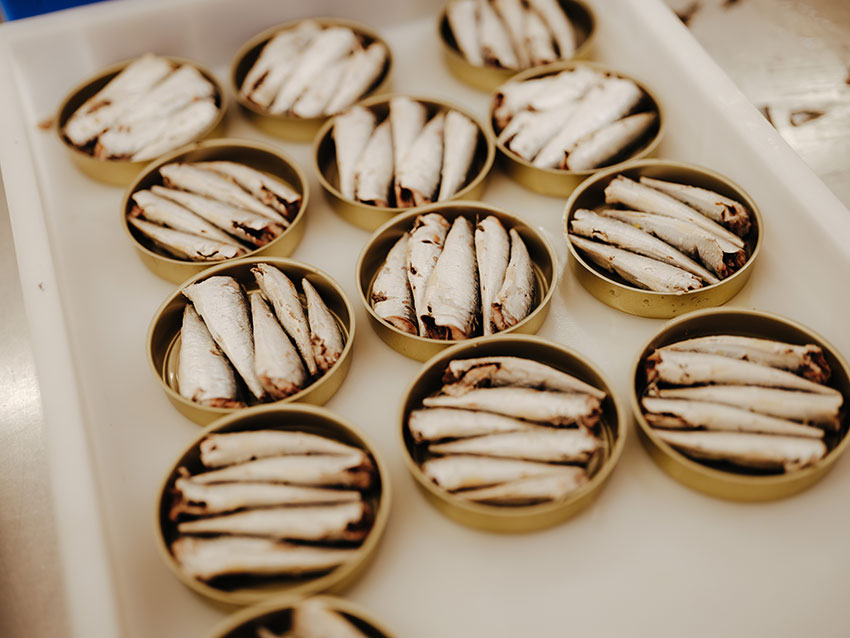
That it isn’t seasonal. People think because it’s preserved in a can, it somehow sits outside the seasons. For us, it still begins with a real fish, landed at a particular time, from a particular place. Cuttlefish comes in spring. Sardines have their season. Mussels, hake, pollock – everything has its moment. The can preserves the season; it doesn’t remove it.
What makes a good can of fish?
Traceability. I want to know who made it, where the fish came from, who caught it, and what the process was. There are big factories producing lots and lots of brands, and beautiful packaging can hide a lot. The conservers I’m interested in are the ones where you can see the people behind them. If they’re doing it the hard way, it’s usually because they really care about it.
What’s the hardest thing to get right in a can?
The protein. Fish changes under heat and pressure, and the process has to be very controlled. Mussels are difficult because they’re so delicate, and white fish can be difficult too. You have to think about how it is salted, how it is prepared, how it will hold up under heat, what oil or sauce it sits in, and how it will eat at the other end. From the outside it looks very simple, but there is a lot going on.
What’s the best way to eat a good can of fish?
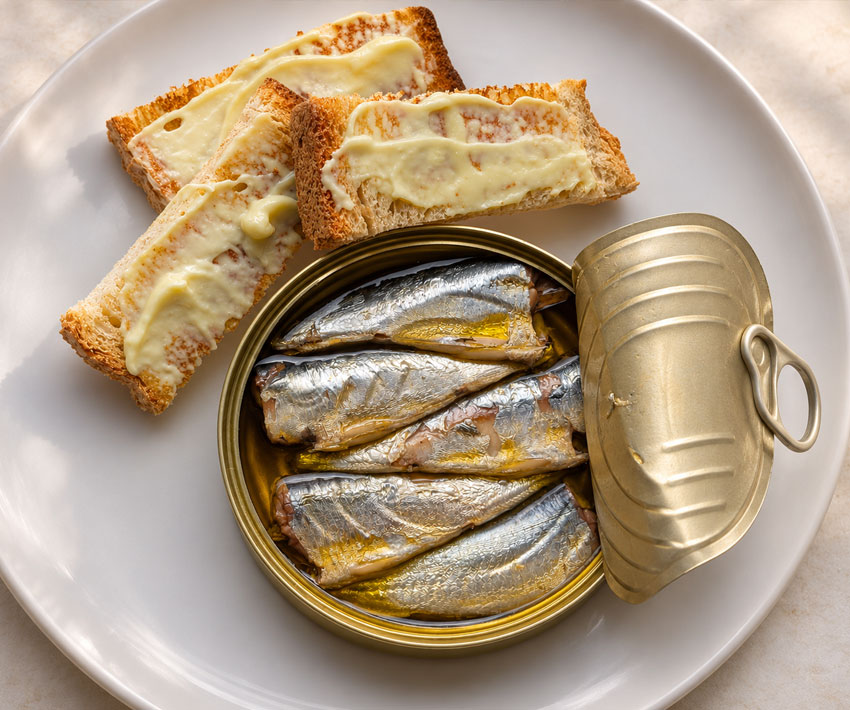
Our range is made for someone who wants to crack open a can and enjoy it. It’s like buying a good British cheese or good charcuterie. You might cook with it, but most of the time you want to eat it in its purest form, on a vessel: sourdough, a cracker, a crisp, something like that. If the product is good enough, you don’t need much with it.
What’s your death-row Sea Sisters conservas and drink?
The salt pollock with garlic, bay and extra virgin olive oil. It was the first can we ever launched, so it’s nostalgic for me. It’s like bacalao, which would usually be made with cod, but we use pollock because it’s British. We hadn’t produced it for a while because the quotas were reduced while stocks were being monitored, but we’re sourcing it again now. I’d eat that straight from the can with a nice vermouth, or maybe a chilled wine, and some sourdough or crackers.
What advice would you give someone starting a food product?
First and foremost, it has to be banging. It has to be really delicious. Our first year was testing the product on real people and getting real-life feedback all the time. Then you have to look at the market and understand where you’re going to position yourself. If you’re a good business person, you probably get someone else to make it for you, because manufacturing involves huge investment. But if you’re passionate about the craft and want full control, making it yourself has advantages. You can make decisions on everything, from the ingredients to how often you release something, depending on its seasonality.
How hard is it to grow when you make everything yourselves?
We have to suppress growth every month. We could probably sell double what we sell now, maybe more, but the product can only grow as fast as we can make it. Canning is a craft. It needs human input, training, care, safety, quality control. Every stage matters. We’ve always had a waitlist of shops, and there are people who want to work with us that we’ve had to delay. Online sales could be much bigger too, but we’re constantly balancing direct customers, independent shops, production capacity, fish supply and what the team can physically make.
All Photographs by Dan Wilton